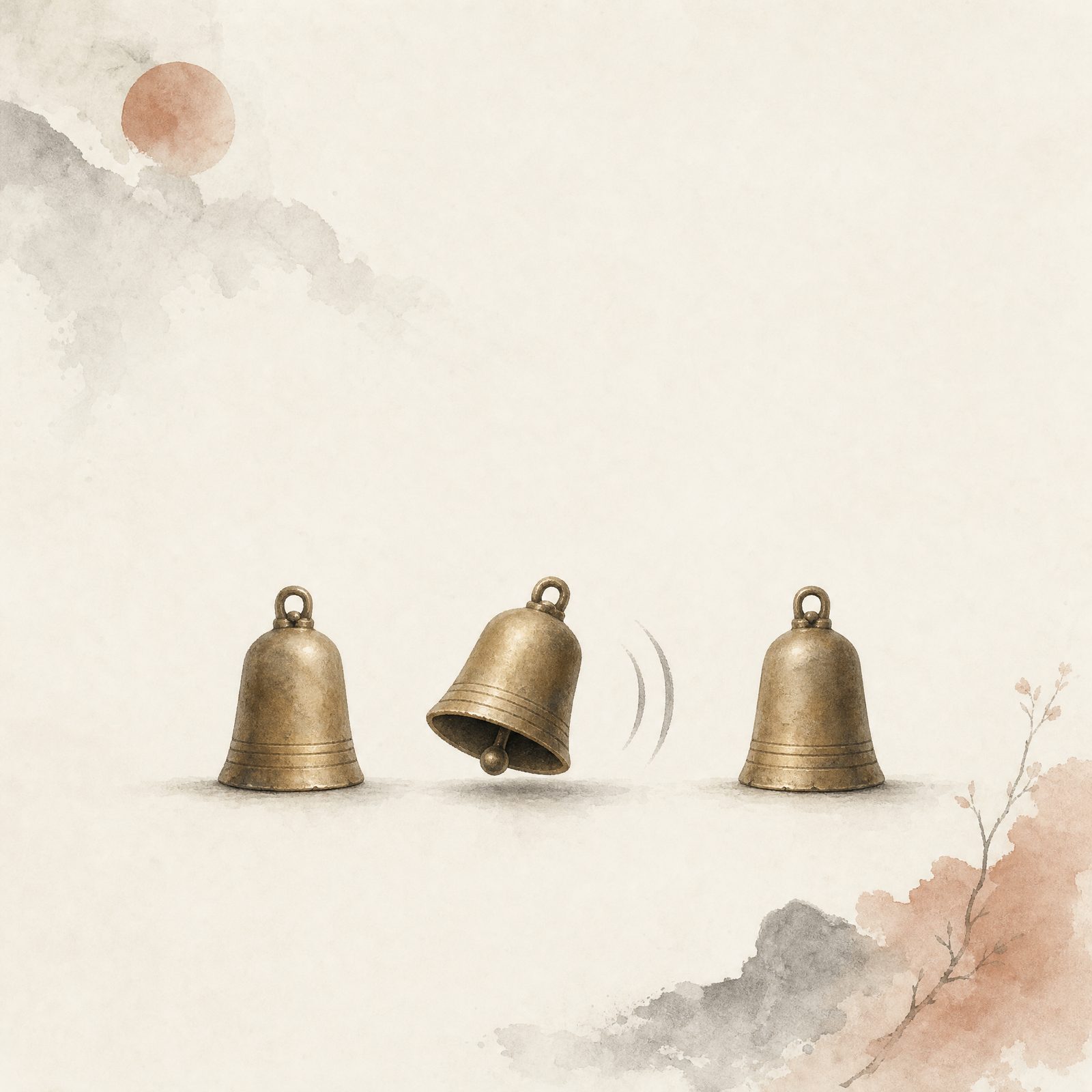
Still the Bells
A listening game. Three bells ring in sequence and you repeat the order — but the sequences grow slowly, and the game never punishes a miss. It simply begins again, softer.
Stillness: deepQuiet Joker is a small journal written from a desk in Hobart. We take our time with calm, free-to-play casual games built around the jester — the bells, the folded hat, the wild card — and write down what stays with us after the screen goes dark.
A listening game. Three bells ring in sequence and you repeat the order — but the sequences grow slowly, and the game never punishes a miss. It simply begins again, softer.
Stillness: deep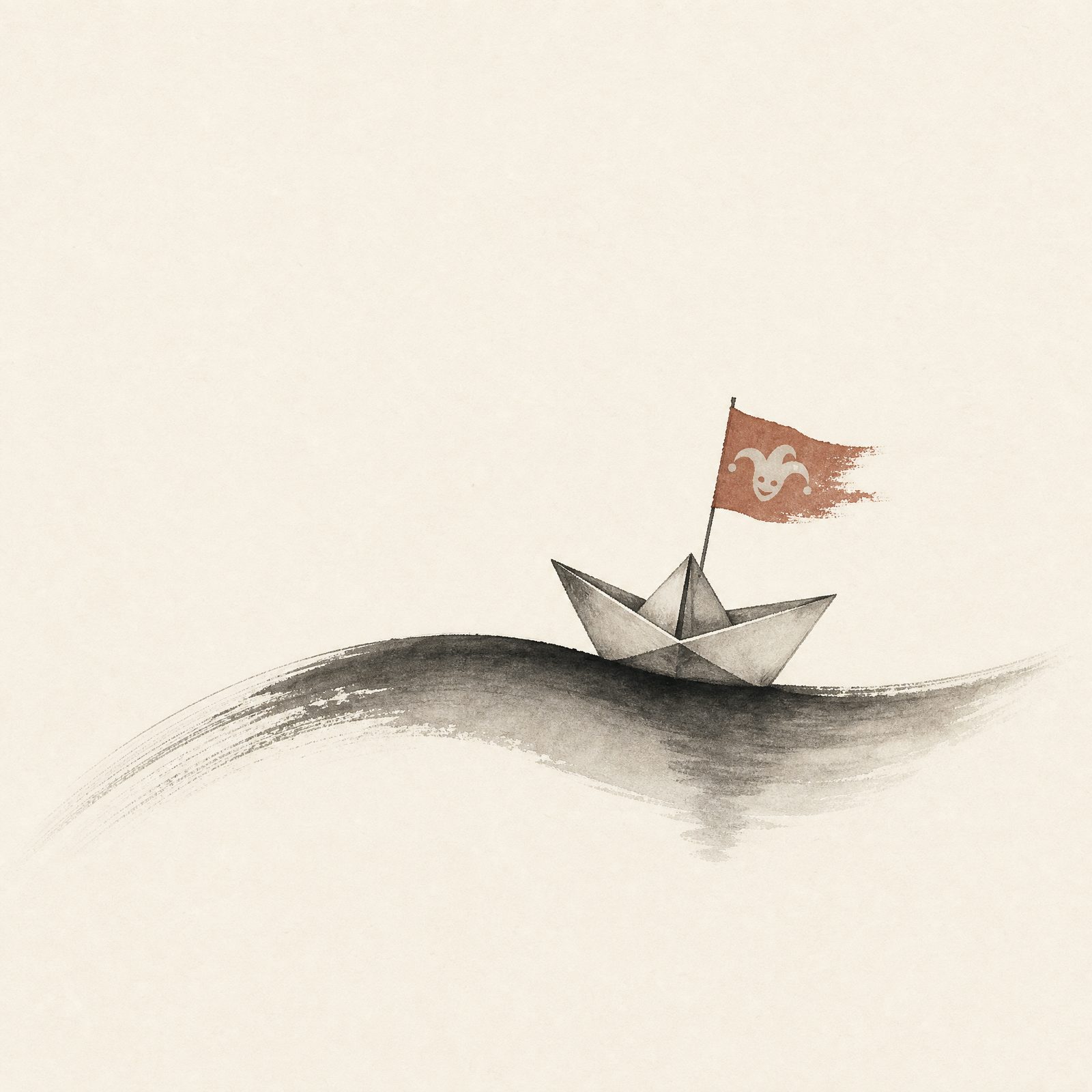
You fold a paper fool through forty gentle puzzles, one crease at a time. There is no timer anywhere in the game, and the paper sounds are recorded, not synthesised.
Stillness: deep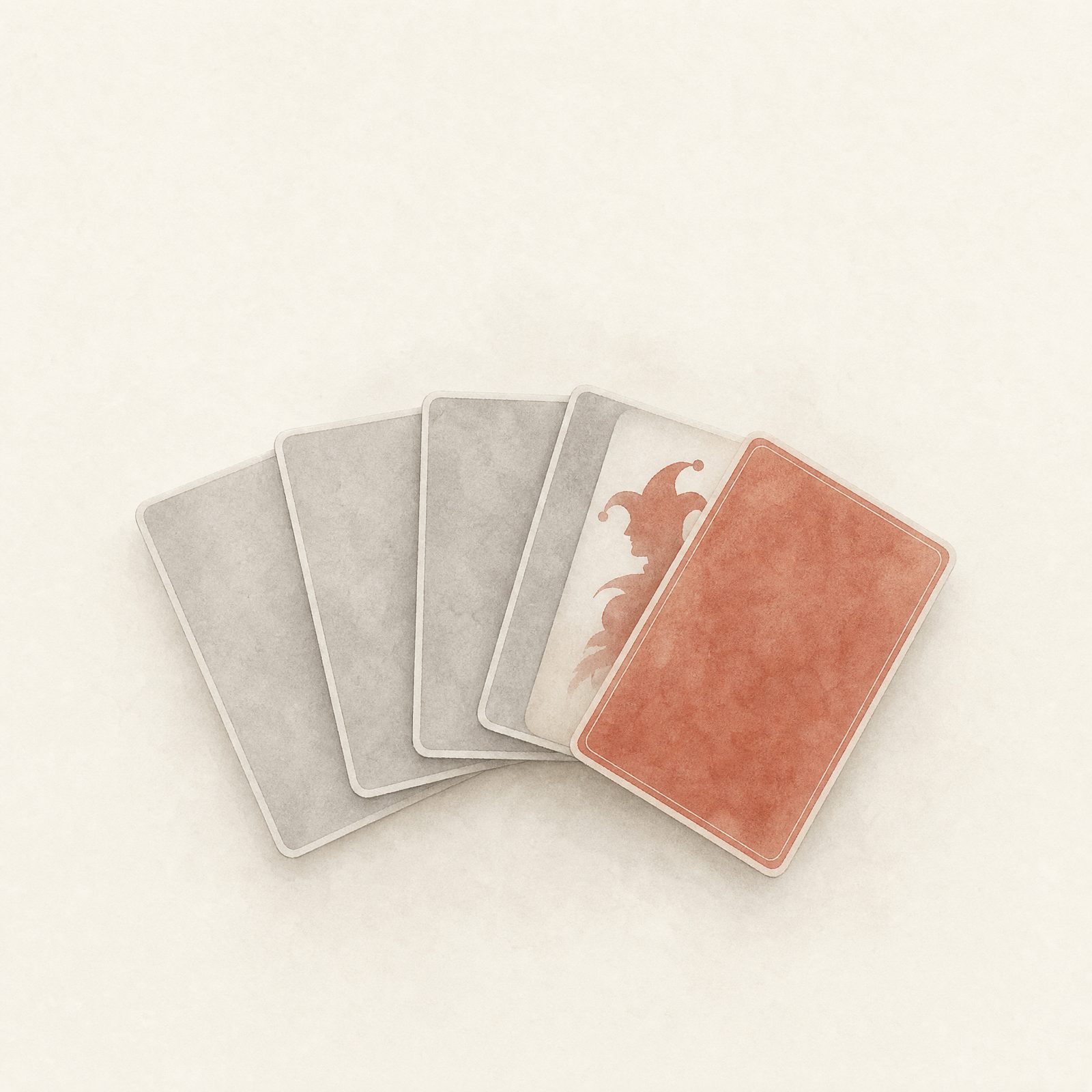
A solitaire variant where the wild card behaves like a held breath: keep it too long and the tableau tightens, release it early and the game opens. Entirely free, entirely quiet.
Stillness: settled
Each daily puzzle gives you a full deck and exactly one joker. Where you place it decides everything. Five minutes a day, and it asks for nothing else.
Stillness: settled
A walking game. Your fool carries a lantern up a long ridge, and puzzles appear as gates of light. The final bell is one of the most restrained endings we have played this year.
Stillness: deepEvery other card in the deck arrives with instructions. A seven is a seven; a queen outranks a jack. The joker arrives with nothing — no suit, no rank, no obligation — and that is precisely why quiet game designers keep returning to it.

A wild card is an invitation to decide for yourself. The gentlest games we review simply extend that invitation, and then wait.
The five games in our current notes all treat the jester this way: as breathing room rather than chaos. None of them sell anything. None of them hurry you. They are played in browsers and on quiet afternoons, and each one was tested here in Hobart over several unrushed weeks.
If that pace sounds like yours, you will likely feel at home in our notes, or with the ethos that guides how we write them.
We only review games that are free to play in full, with nothing to buy inside them. Play should cost you attention, not anything more.
We play slowly, for weeks, before writing a word. A game that is kind on day one and tiresome on day twelve will be described exactly that way.
We rate stillness, not excitement. Our scale runs restless — settled — deep, and we explain the reasoning in every note.
One short letter a month, listing what we played and what we kept. Nothing else, ever.