Each note below follows weeks of slow play. We describe what the game asks of you, what it gives back, and how still it leaves the room. All five are free to play in full, with nothing to buy inside them.
Note 01 — played for five weeks
Still the Bells
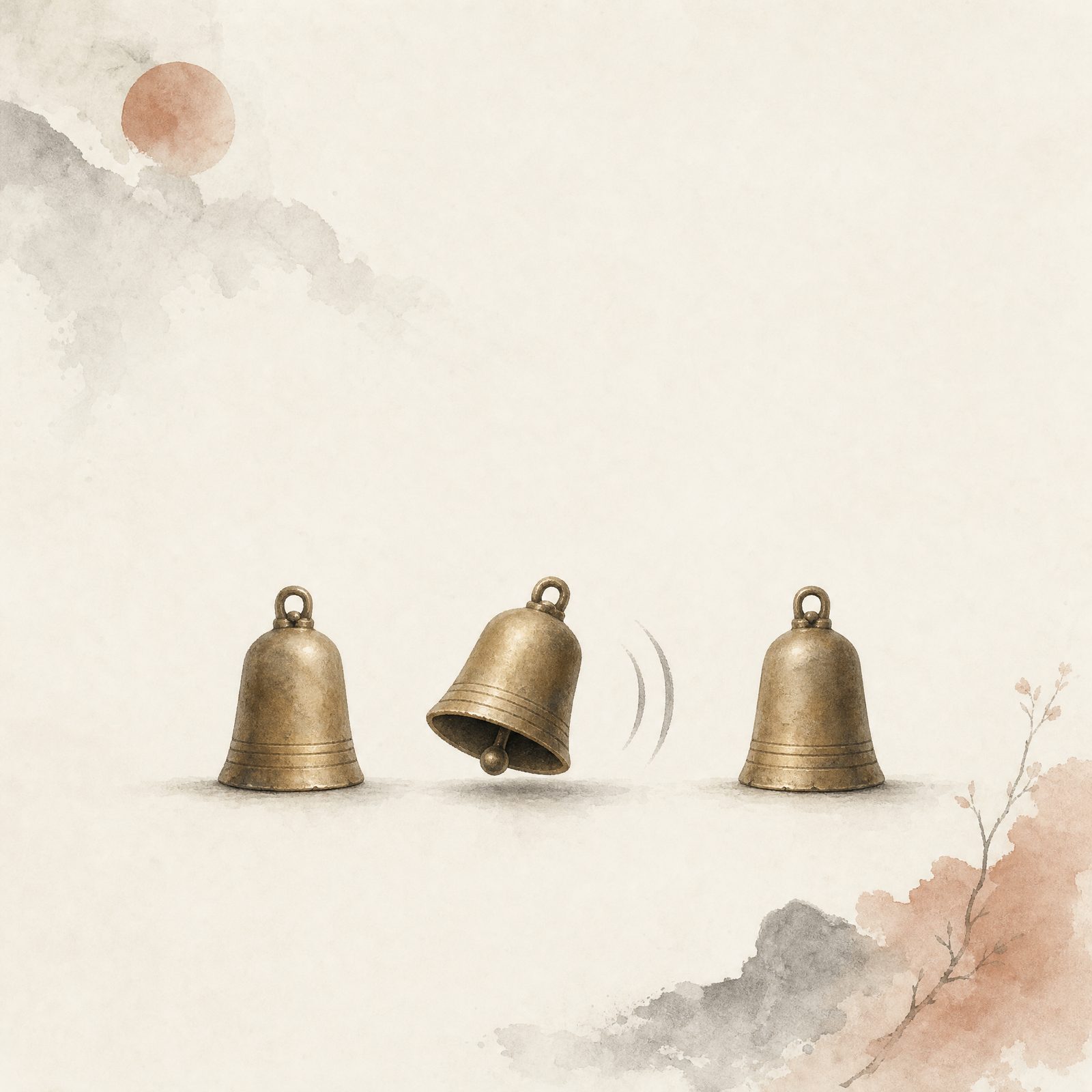
Still the Bells is a listening game before it is anything else. Three brass bells sit in a row on a paper-white screen. They ring in a sequence — two notes at first, then three, then slowly more — and you repeat the order by touch. That is the whole game, and it is enough.
What distinguishes it from every memory game we have tried is its refusal to punish. Miss a note and nothing flashes, nothing buzzes. The sequence simply begins again, played slightly softer, as though the game were lowering its voice rather than raising it. Across five weeks we never once felt scolded, and yet the sequences we could hold grew from four bells to eleven.
The jester connection is quiet but deliberate: the bells are the bells of a fool's cap, and the loading screen folds them into a small grey hat between sessions. Sessions themselves are short — five to ten minutes — and the game gently fades its own colours near the twenty-minute mark, a wordless suggestion that you might rest.
Who it suits: anyone who wants a memory practice that feels like a wind chime rather than a drill. Stillness: deep.
Note 02 — played for four weeks
Paper Jester
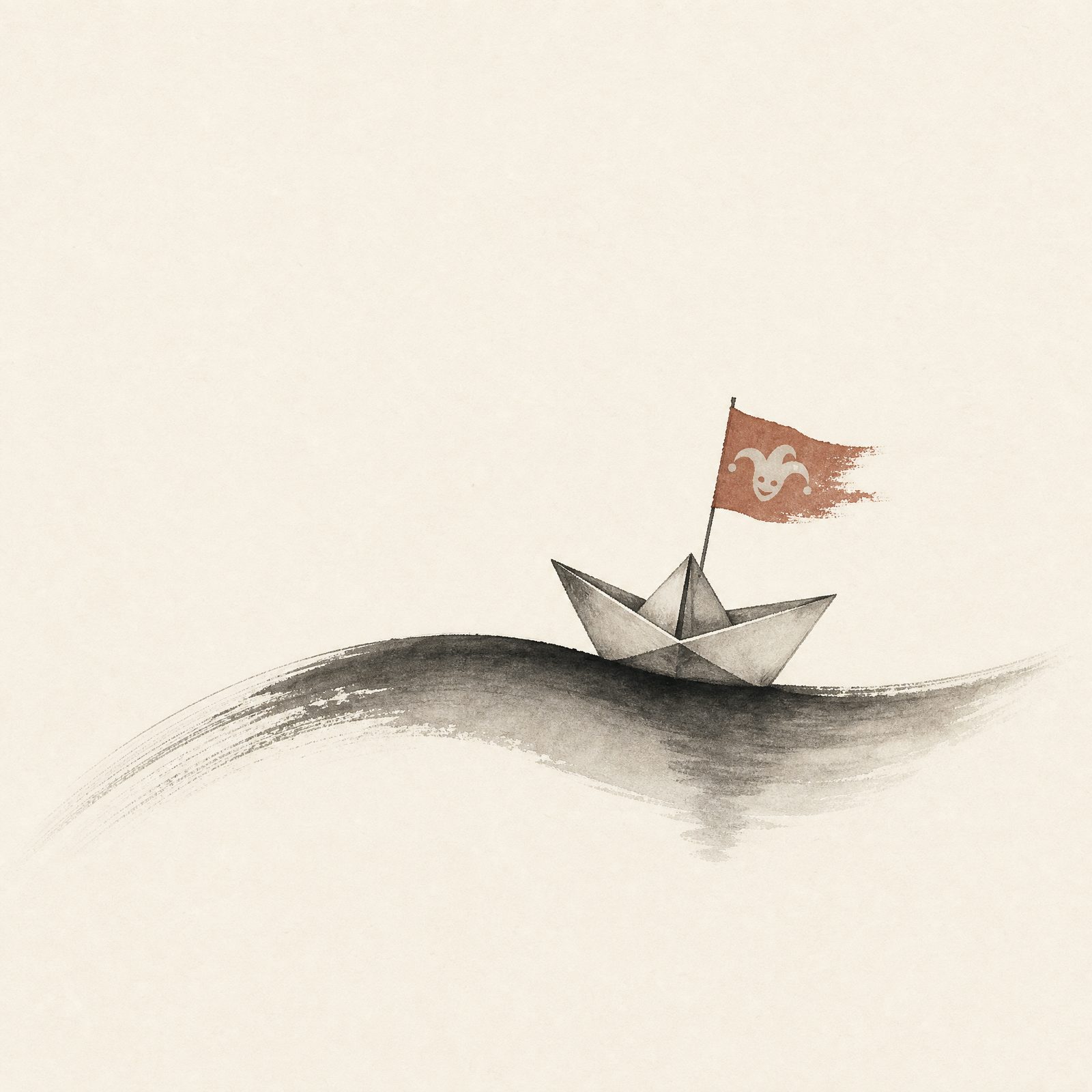
Paper Jester hands you a square of digital paper and, over forty puzzles, teaches you to fold a fool. Each level shows a silhouette — a hat, a bell, a boat with a tiny flag — and you make creases by drawing lines with one finger. Fold well and the paper settles into shape with a sound that is unmistakably real: the developers recorded actual paper, and it shows.
There is no timer, no move counter, no star rating. A puzzle is finished when the shape is right, and unfinished until it is, and the game sees no difference between the player who solves it in one minute and the one who takes twenty. On several evenings we deliberately folded wrongly just to watch the paper crumple and relax again.
The difficulty curve is a slow ramp rather than a staircase. Late puzzles ask for eight or nine creases in the correct order, and the final fold — the full jester, hat and collar and all — took us three quiet evenings. Completing it unlocks nothing except a small animation of the paper fool bowing, which felt, honestly, like the right reward.
Who it suits: players who find instructions relaxing and erasers reassuring. Stillness: deep.
Note 03 — played for six weeks
Quiet Shuffle
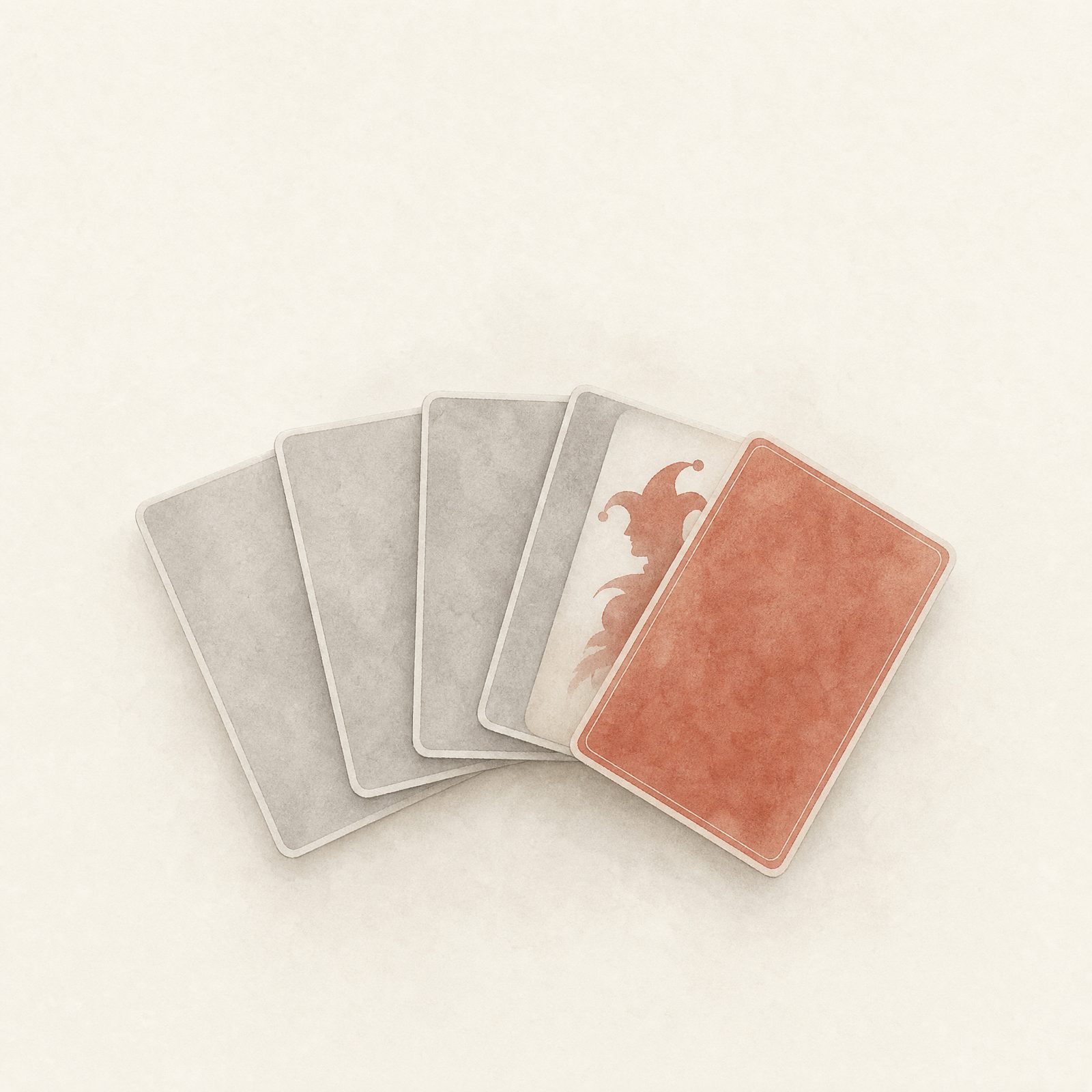
Of the five games in these notes, Quiet Shuffle is the closest to a classic. It is a single-deck solitaire, played on a muted table, with one addition: a joker that behaves like a held breath. You may tuck it under any pile, where it silently absorbs one mistake — but the longer it stays hidden, the fewer cards the deal returns to you each round.
This one rule reshapes the whole game. Beginners keep the joker buried for safety and find their tableaus narrowing; experienced players release it early, accept the risk, and are rewarded with looser, more forgiving deals. Learning to let go of the safety card — literally — is the education the game quietly offers.
Rounds run six to twelve minutes. There are no daily streaks, no leagues, no prompts to return; the game keeps no score across sessions unless you ask it to in the settings. After six weeks our only complaint is the shuffle animation, which at two seconds is a touch long when you are dealing often.
Who it suits: solitaire players who suspect the wild card has been trying to teach them something all along. Stillness: settled.
Note 04 — played for seven weeks
One Wild Card
One Wild Card publishes a single puzzle each morning. You receive a dealt tableau and exactly one joker, and the day's question is always the same: where does it belong? Placement is permanent, the puzzle is shared by everyone who plays that day, and when you are done, the game is done with you until tomorrow.
The design borrows the daily-ritual shape that word games made familiar, but strips away everything competitive. There is no streak counter and no share button; instead, after solving, you may view an unhurried breakdown of how the day's tableau was constructed, written by the puzzle's setter in two or three paragraphs. These setter's notes became our favourite reading of the week.
Some days the puzzle takes three minutes, some days fifteen. Across seven weeks the variety never flagged: jokers that wanted to be bridges, jokers that wanted to be sacrifices, one memorable Sunday joker whose correct place was, counterintuitively, nowhere — the solution was to set it aside untouched.
Who it suits: people who like their daily ritual small, shared and finished by the second cup of tea. Stillness: settled.
Note 05 — played for four weeks
Lantern Fool
Lantern Fool is a walking game. Your fool carries a paper lantern up a long ink-brush ridge, one screen at a time, and the walk is interrupted only by gates of light — small environmental puzzles solved by adjusting the lantern's glow. Brighten it and hidden paths appear; dim it and skittish shadow-birds settle, letting you pass.
The pacing is the star. Between puzzles there are stretches of pure walking, thirty seconds or a minute, past brushstroke pines and the occasional distant bell. On a first evening this can feel like emptiness. By the second week it feels like the point: the puzzles are commas, and the walk is the sentence.
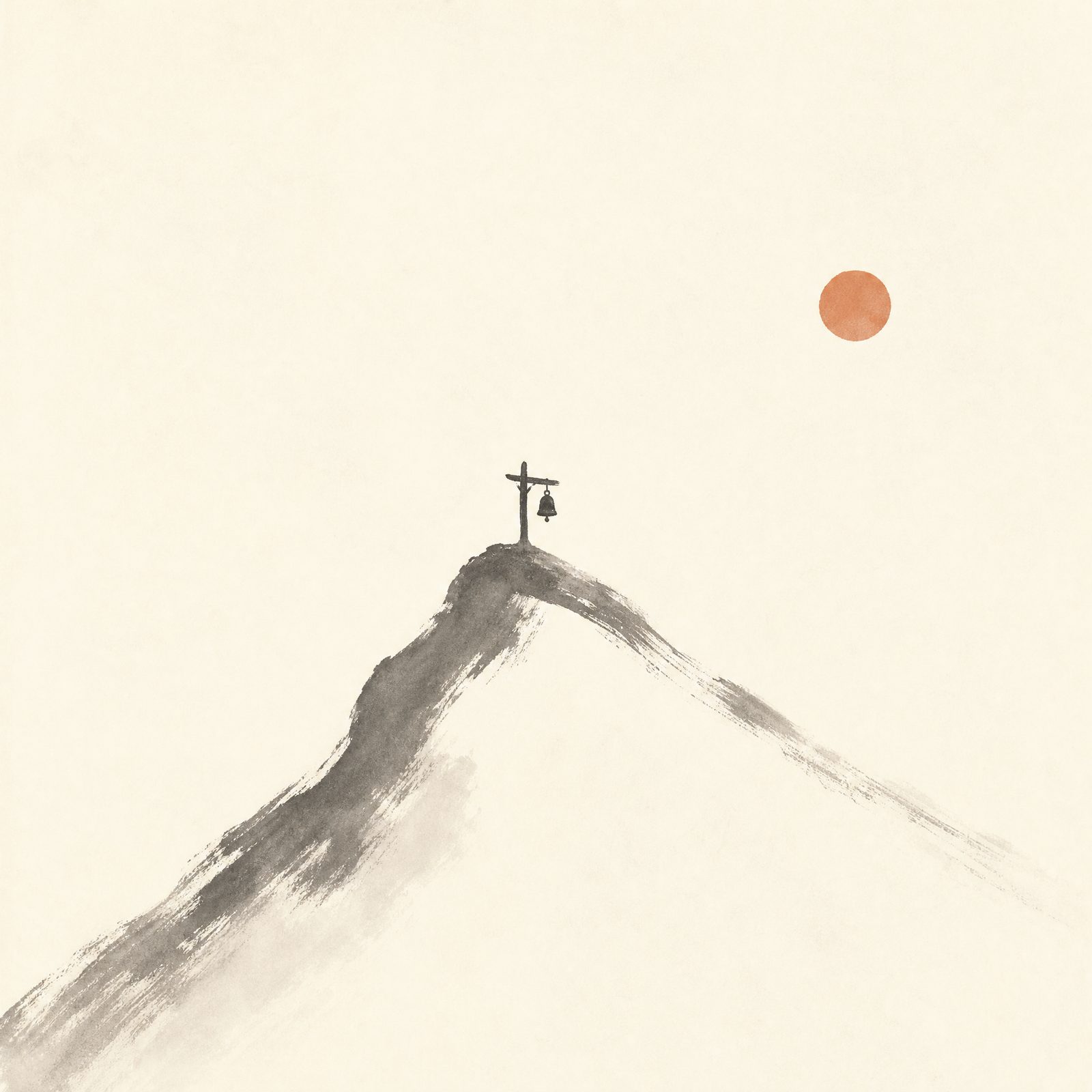
The ending deserves its reputation among quiet-game circles. The ridge narrows, the sun lowers, and the final gate asks you to extinguish the lantern entirely — to finish the climb by moonlight and memory. A single bell rings when you reach the post at the summit. The screen holds for a moment, then offers no menu, no score: just the fool, sitting down to watch the valley. We sat too.
Who it suits: anyone who has ever walked the long way home on purpose. Stillness: deep.
At a glance
Game
Kind of play
Session length
Stillness
Still the Bells
Listening & memory
5–10 minutes
Deep
Paper Jester
Folding puzzles
10–20 minutes
Deep
Quiet Shuffle
Solitaire with one joker
6–12 minutes
Settled
One Wild Card
Daily placement puzzle
3–15 minutes
Settled
Lantern Fool
Walking & light puzzles
15–25 minutes
Deep
Our stillness scale is explained on the ethos page. All five games were free to play in full at the time of writing, with no purchases of any kind inside them.